From Tabular Q-Learning
to DQN
GitHub Repository
https://github.com/araffin/rlss23-dqn-tutorial
Blog post
https://araffin.github.io/post/rl102/
Outline
- RL 101 refresher
- Tabular Q-Learning
- RL as a regression problem (Fitted Q Iteration)
- From FQI to Deep Q-Network (DQN)
Motivation
Stable-Baselines3 (SB3)
                                    from stable_baselines3 import DQN
                                    # SAC, TD3, TQC are all successors of DQN
                                    from stable_baselines3 import SAC, TD3
                                    from sb3_contrib import TQC

                                    # Instantiate the algorithm on the Lunar Lander env
                                    model = DQN("MlpPolicy", "LunarLander-v3", verbose=1)
                                    # Train for 100 000 steps
                                    model.learn(100_000, progress_bar=True)
RL from scratch
Raffin et al. "Learning to Exploit Elastic Actuators for Quadruped Locomotion.": https://github.com/araffin/sbx
Flappy Bird
RL 101


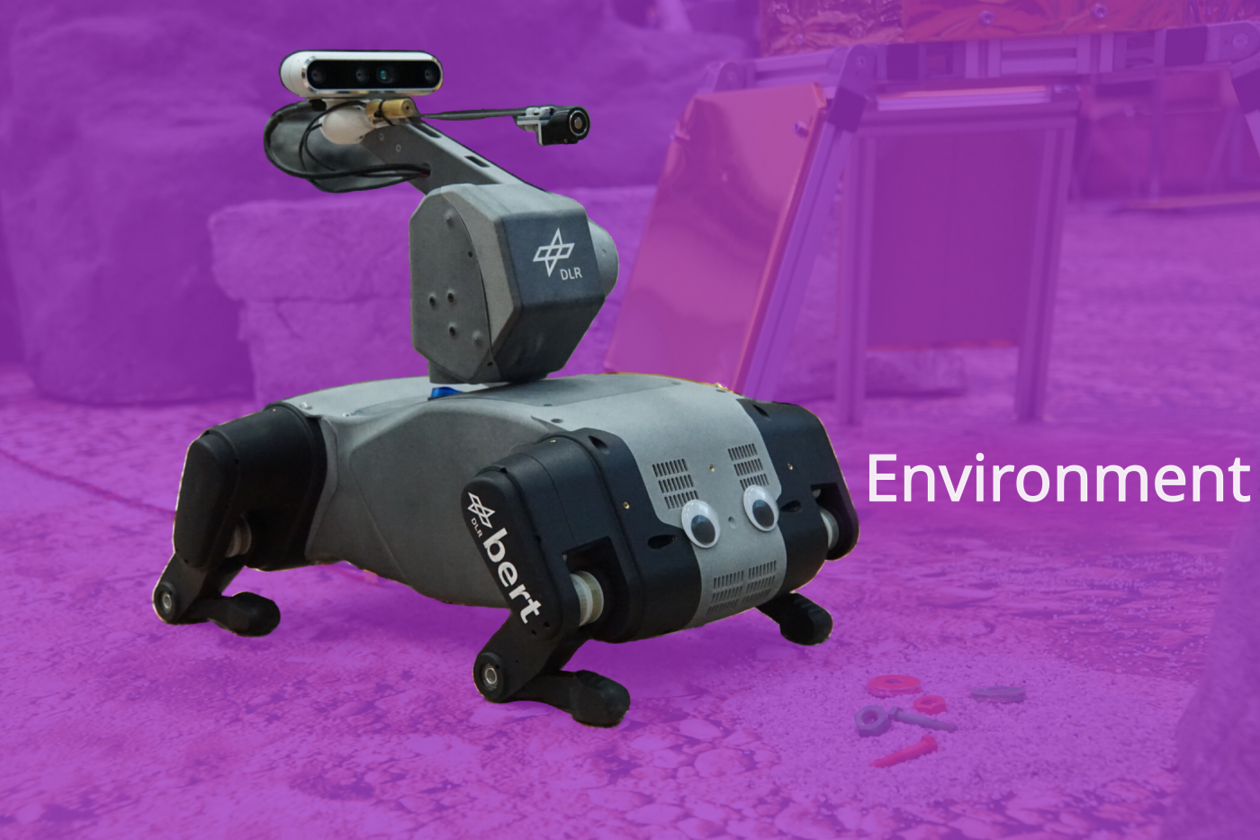

Value Functions
How good is it to be in this state?
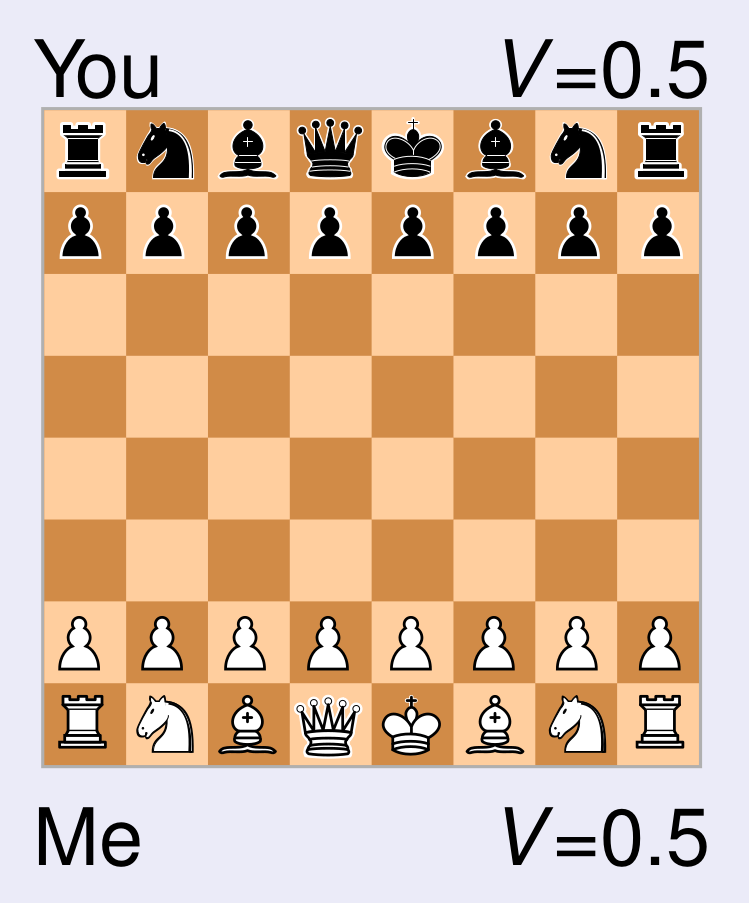
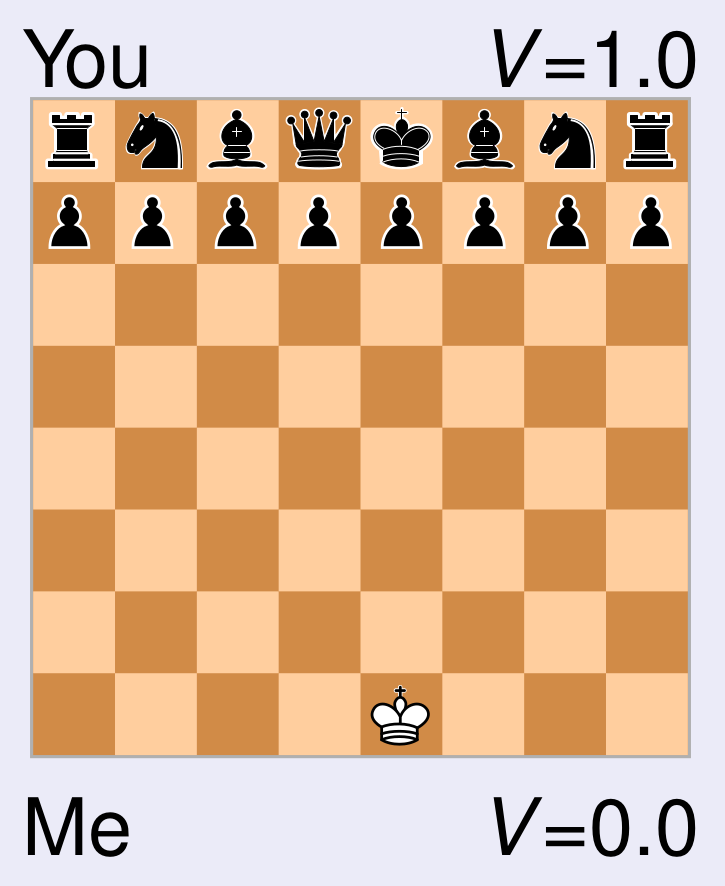
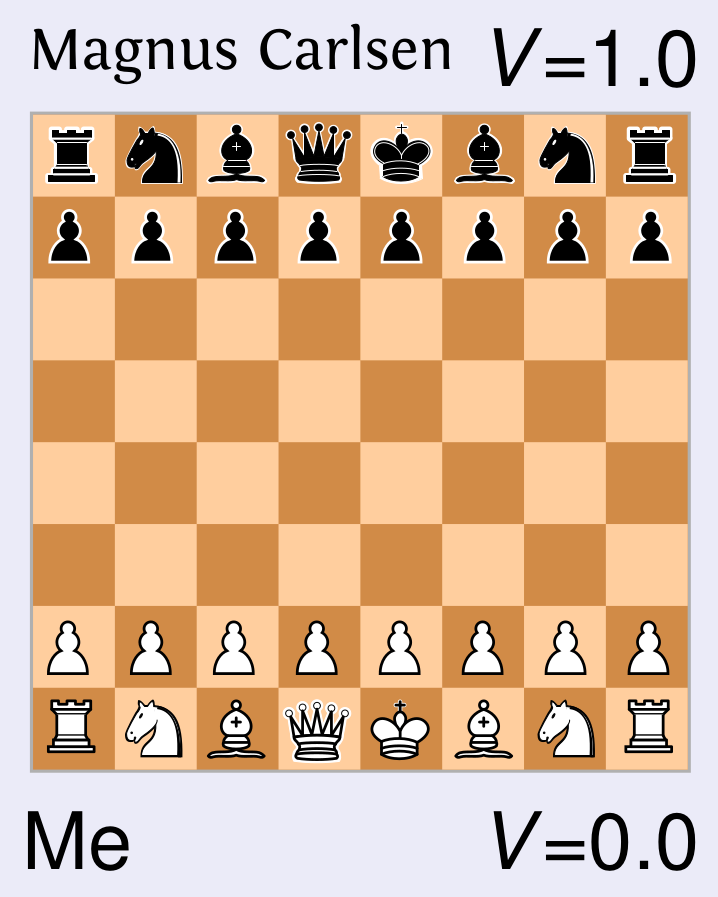
Win: 1.0 | Draw: 0.5 | Lose: 0.0
Depends on the state
Depends on the policy
Source: Freek Stulp - Master AIC
Action-Value Function: Q-Value
What if we have no model?
Solution: $Q_\pi(s, a)$ instead of $V_\pi(s)$

\[\begin{aligned} \pi(s) = \argmax_{a \in A} Q_\pi(s, a) \end{aligned} \]
Tabular Q-Learning: Discrete States
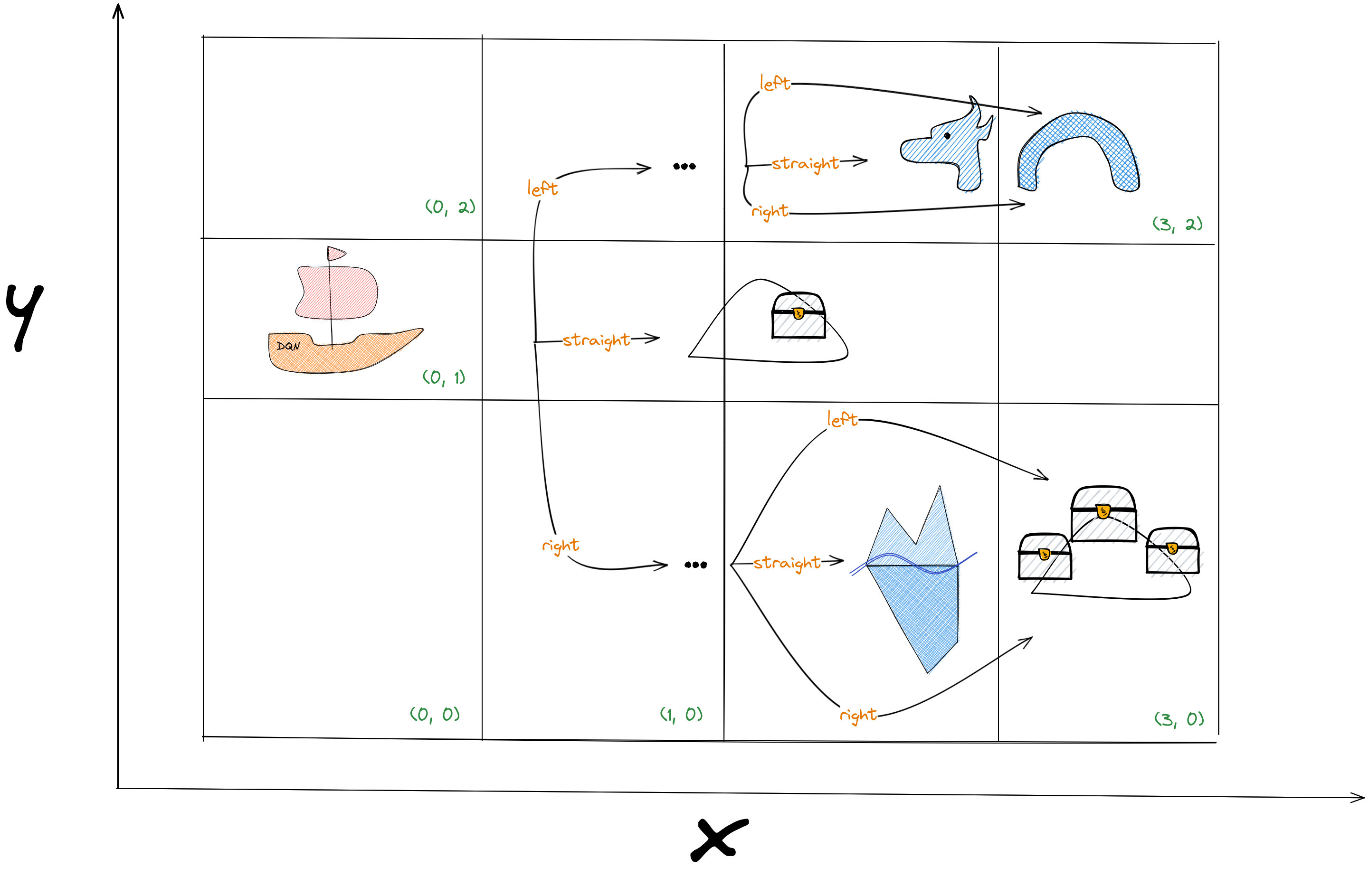
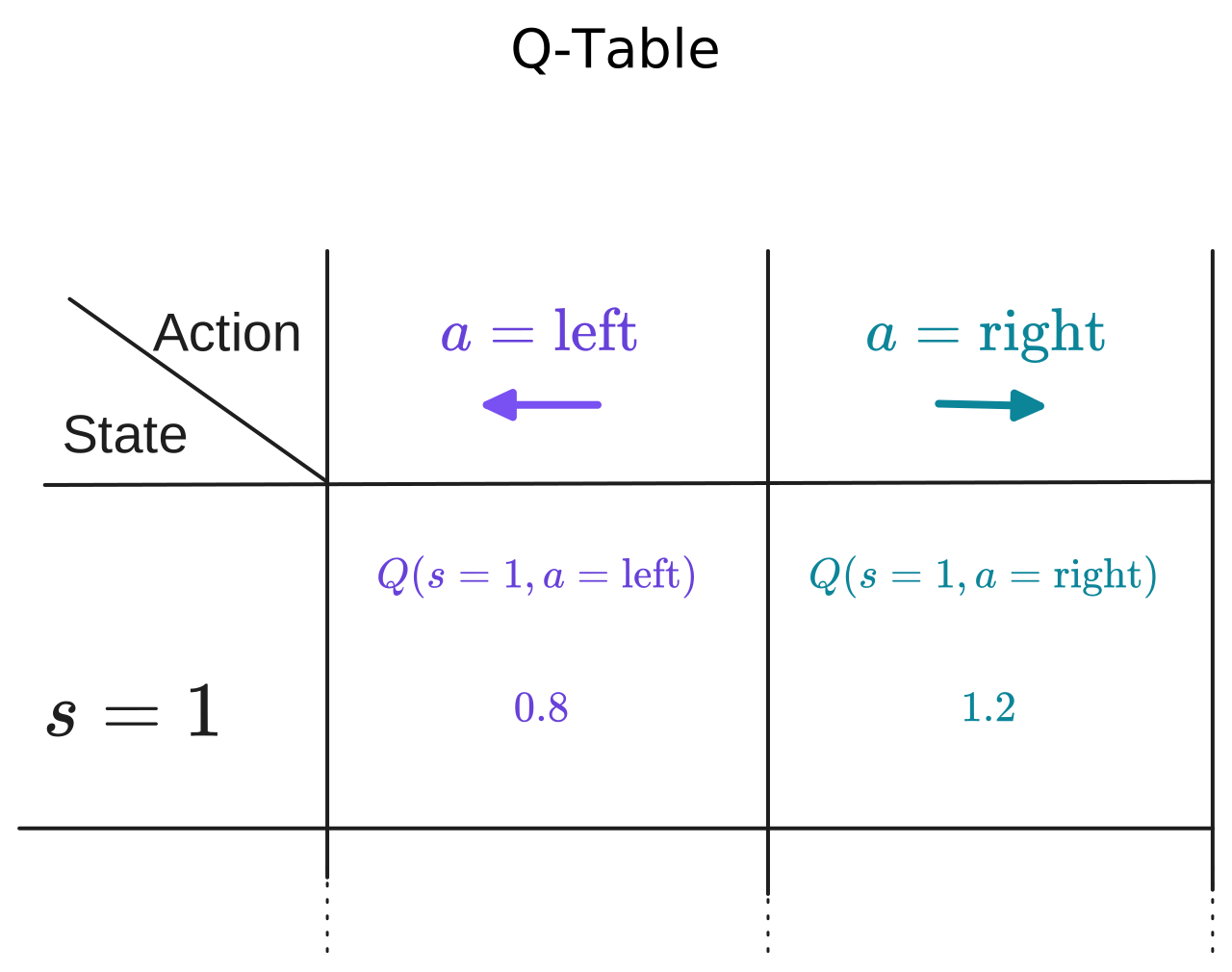
Tabular Q-Learning: Q-table
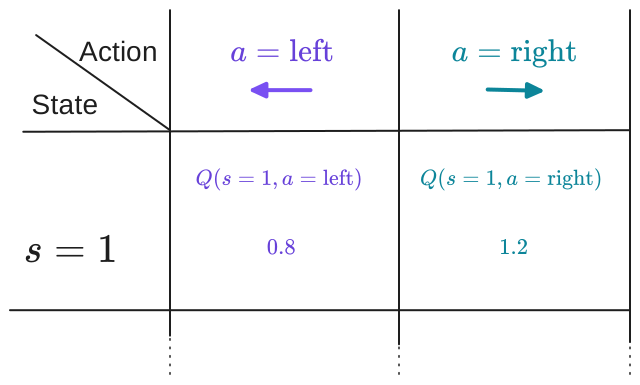
Tabular Q-Learning: Q-values
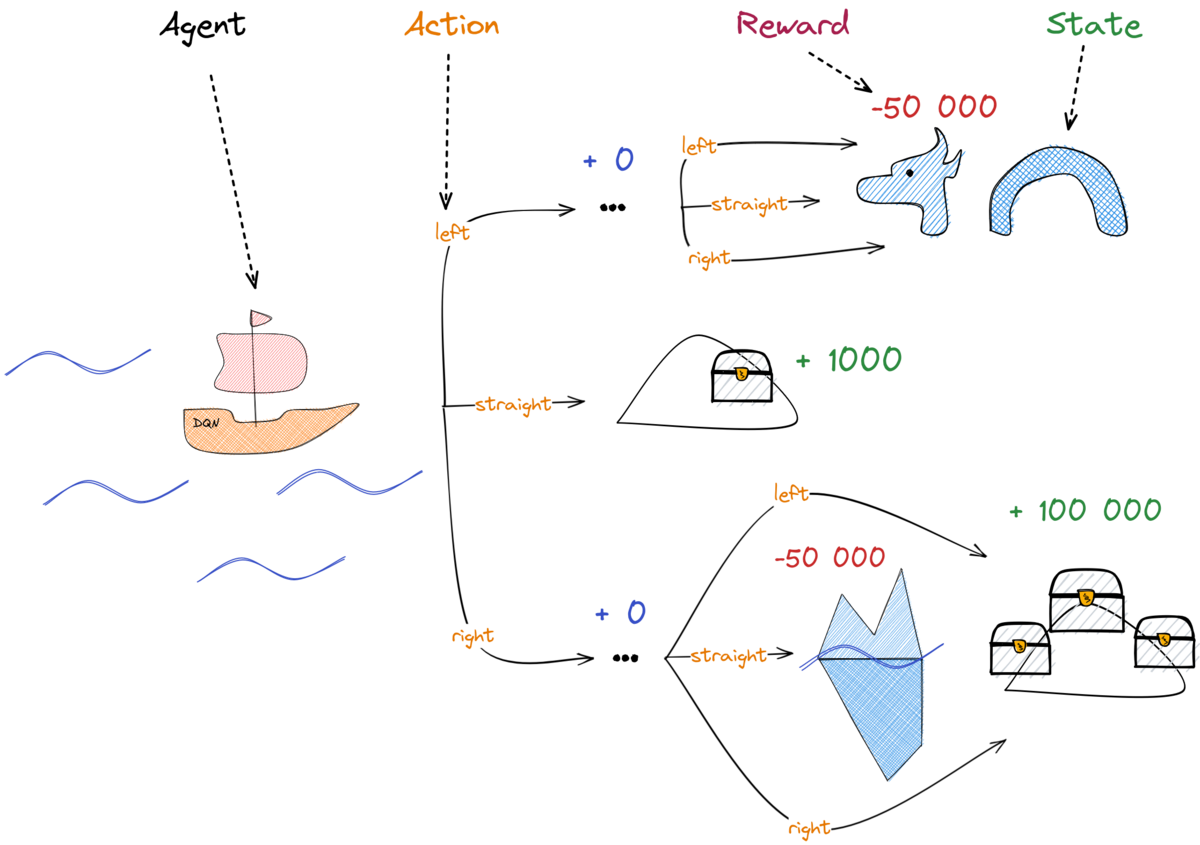
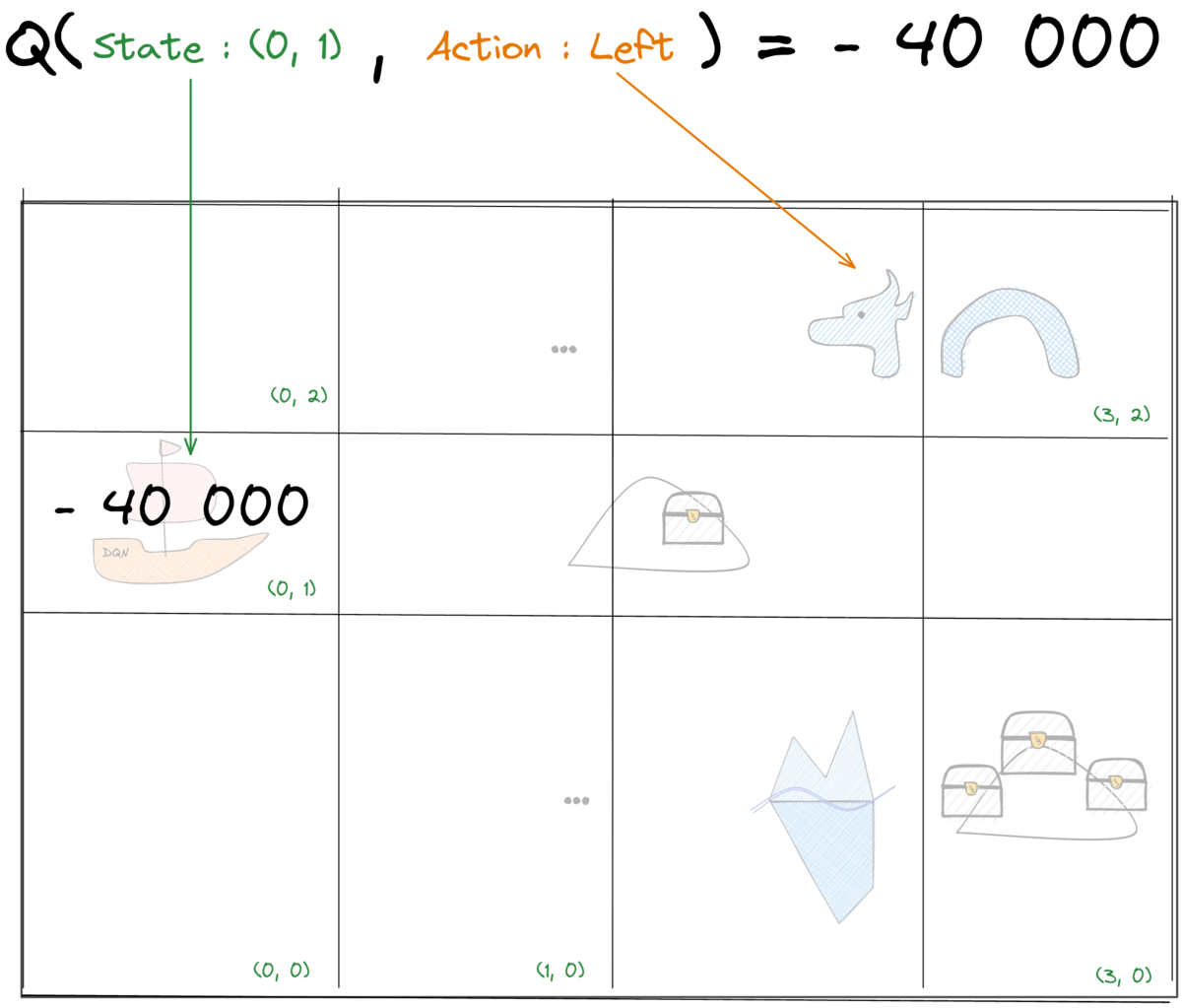
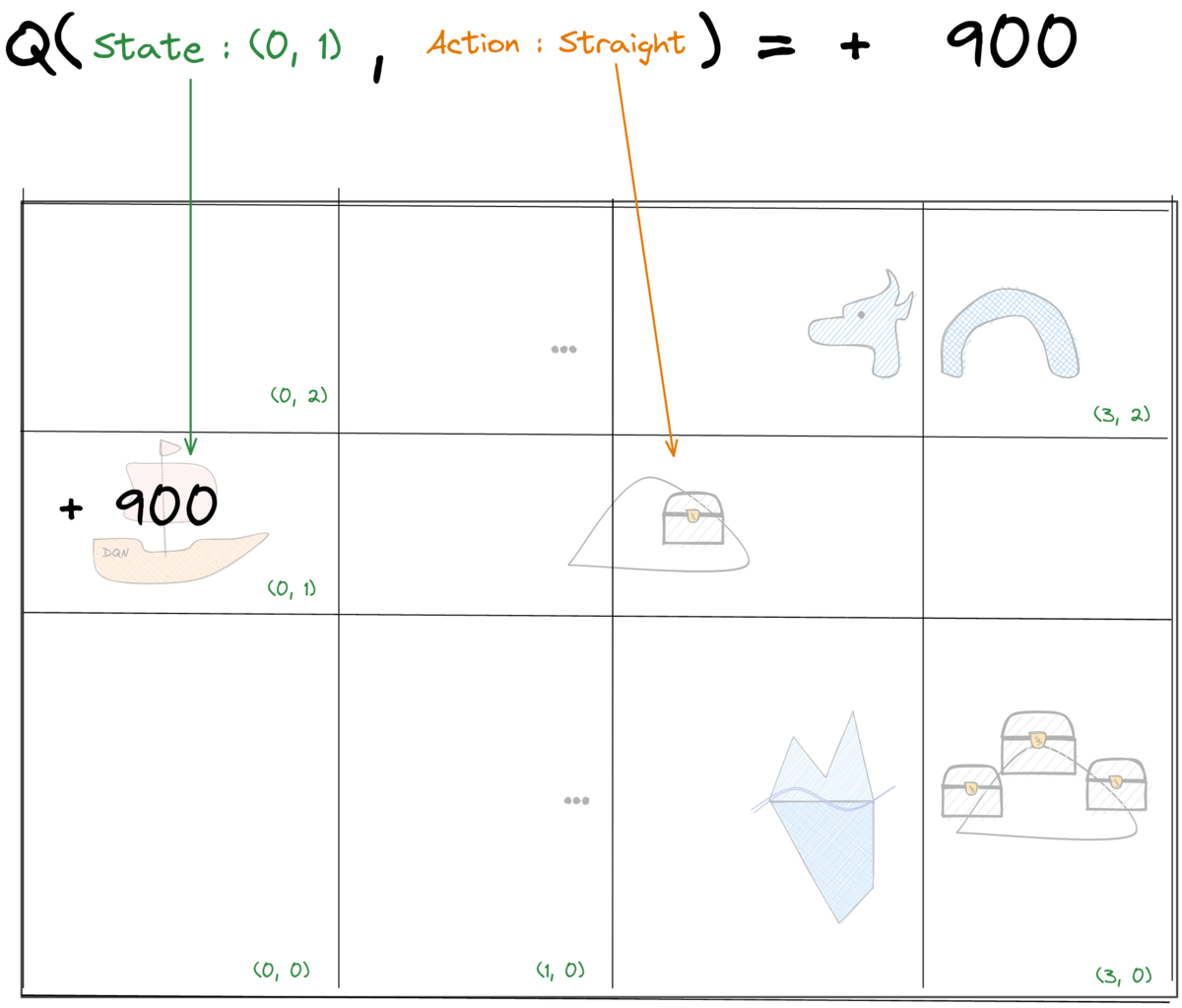
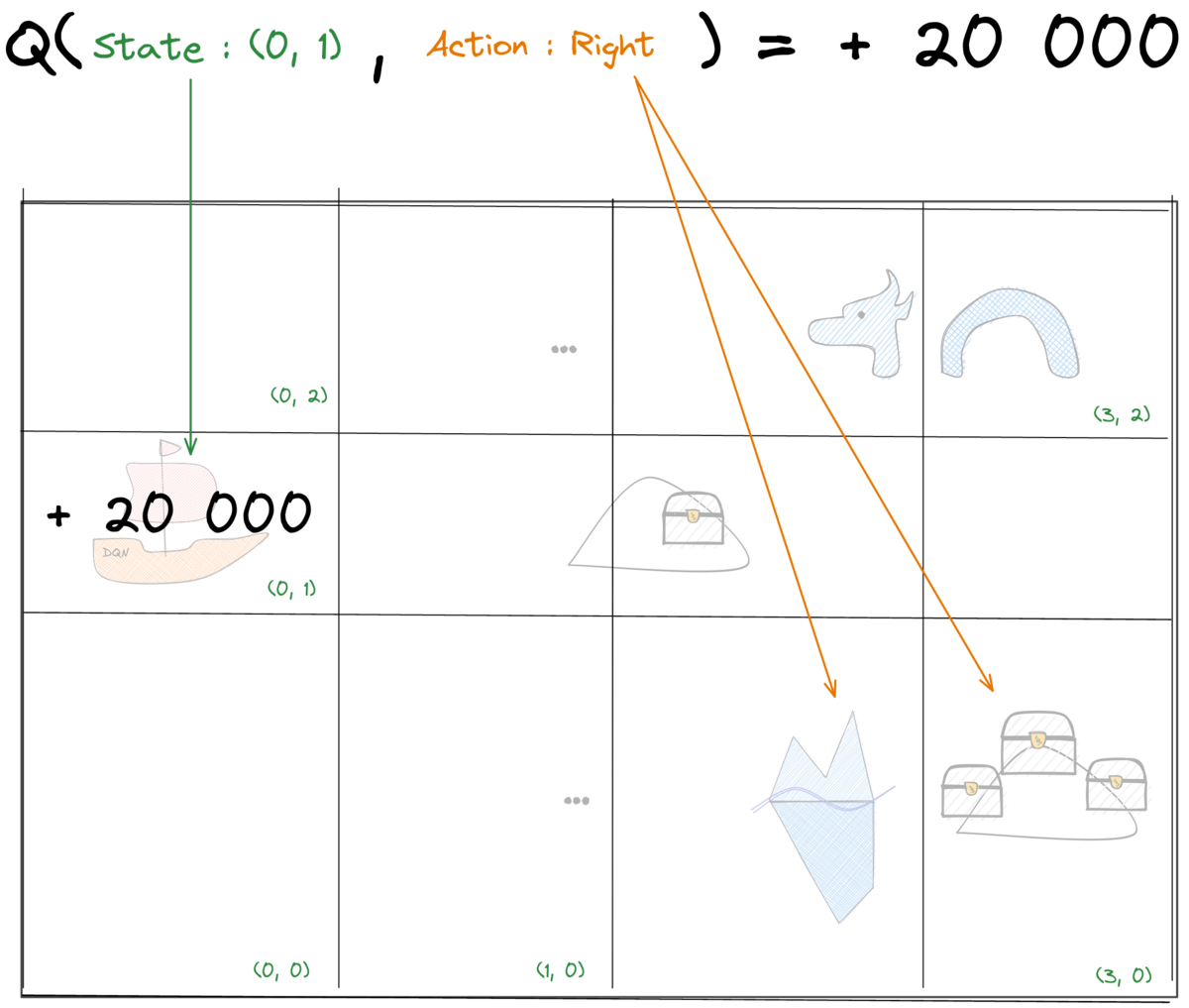
Tabular Q-Learning: Update rule
Bellman equation for optimal value function:
Q-learning update rule

Tabular Q-Learning: Update explained
$\eta=1$ (learning rate)

Reminder

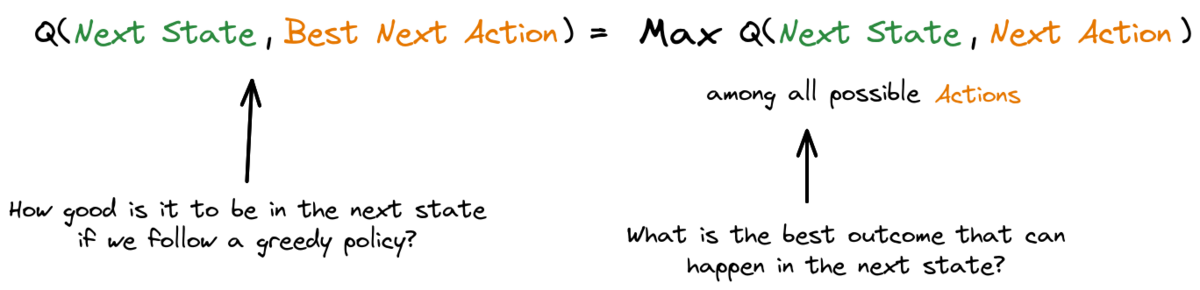
Tabular Q-Learning: Terminal State
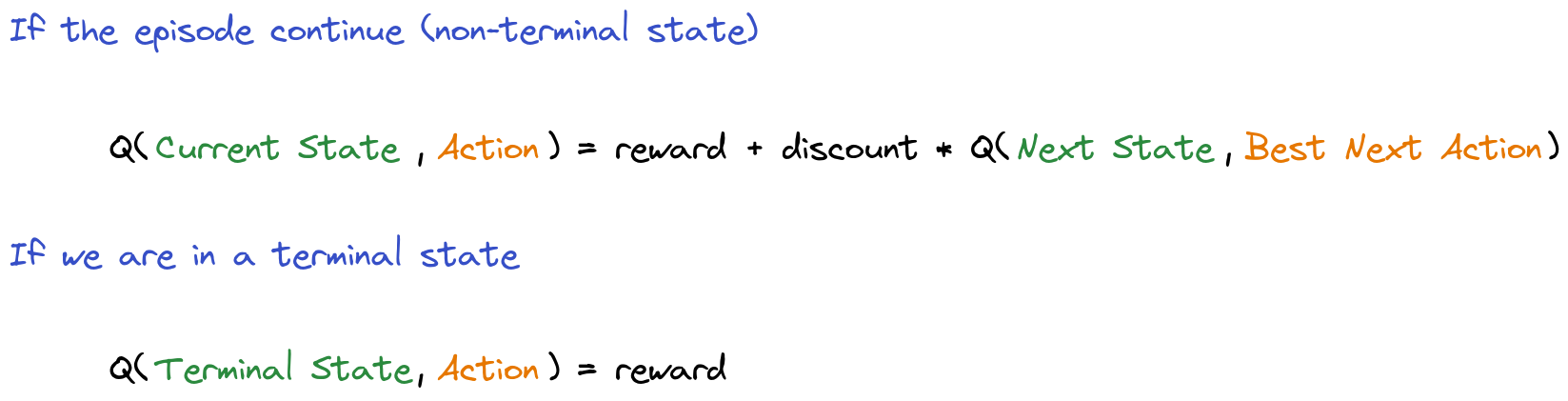
Questions?
Tabular Q-Learning: Limitations
- Discrete states
- No generalization (lookup table)
- Discrete actions
How to go beyond tabular Q-Learning?
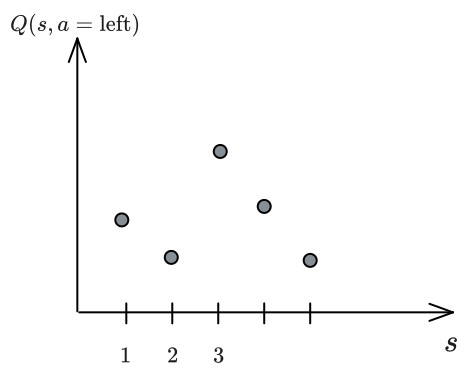
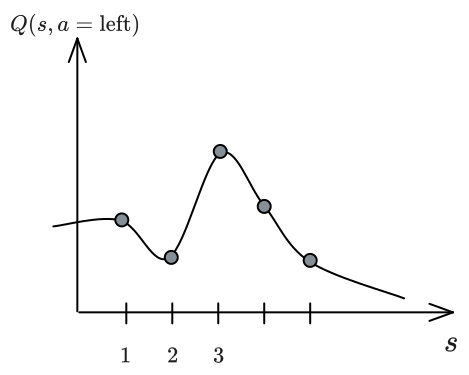
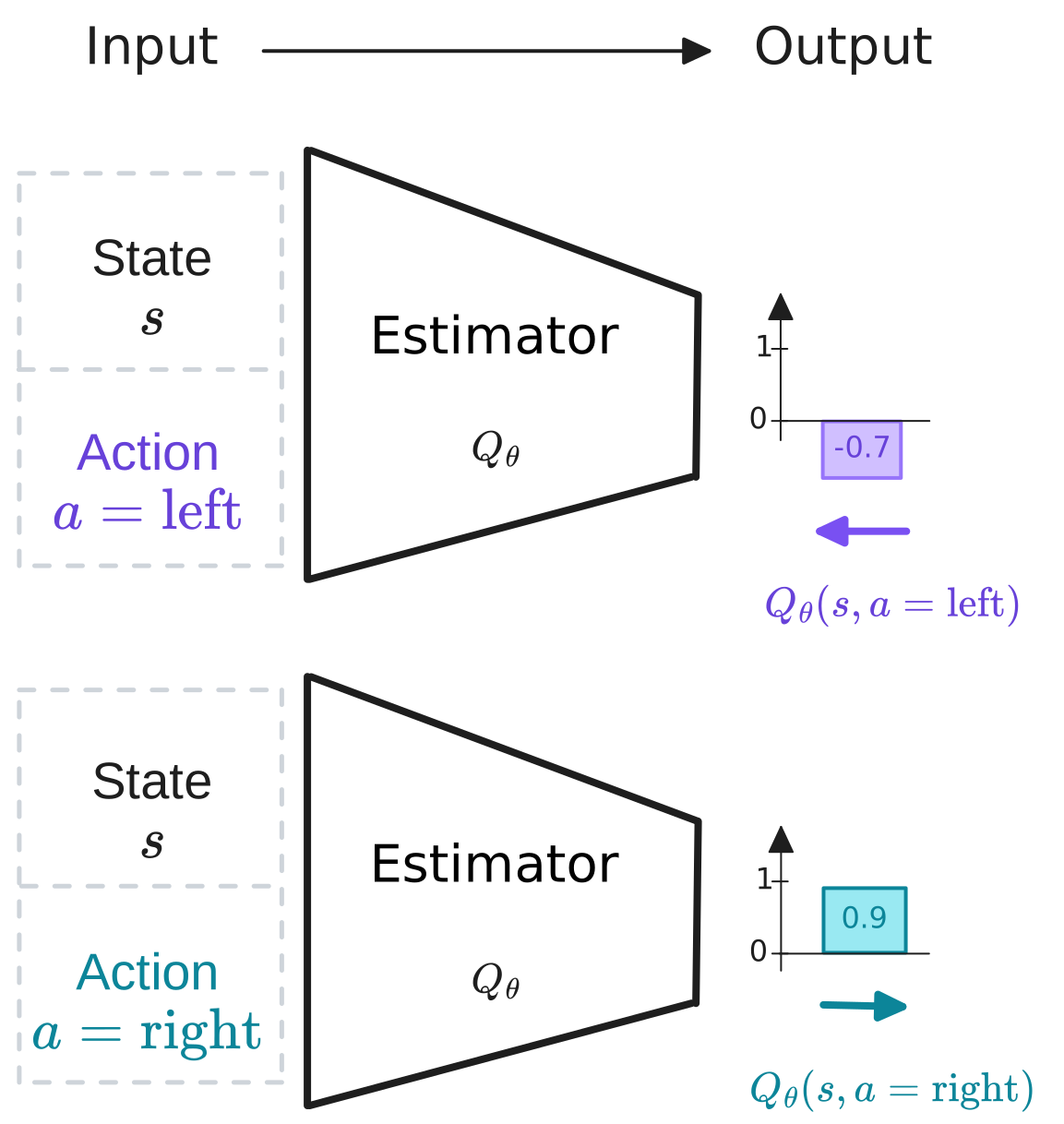
Q-Value Estimator
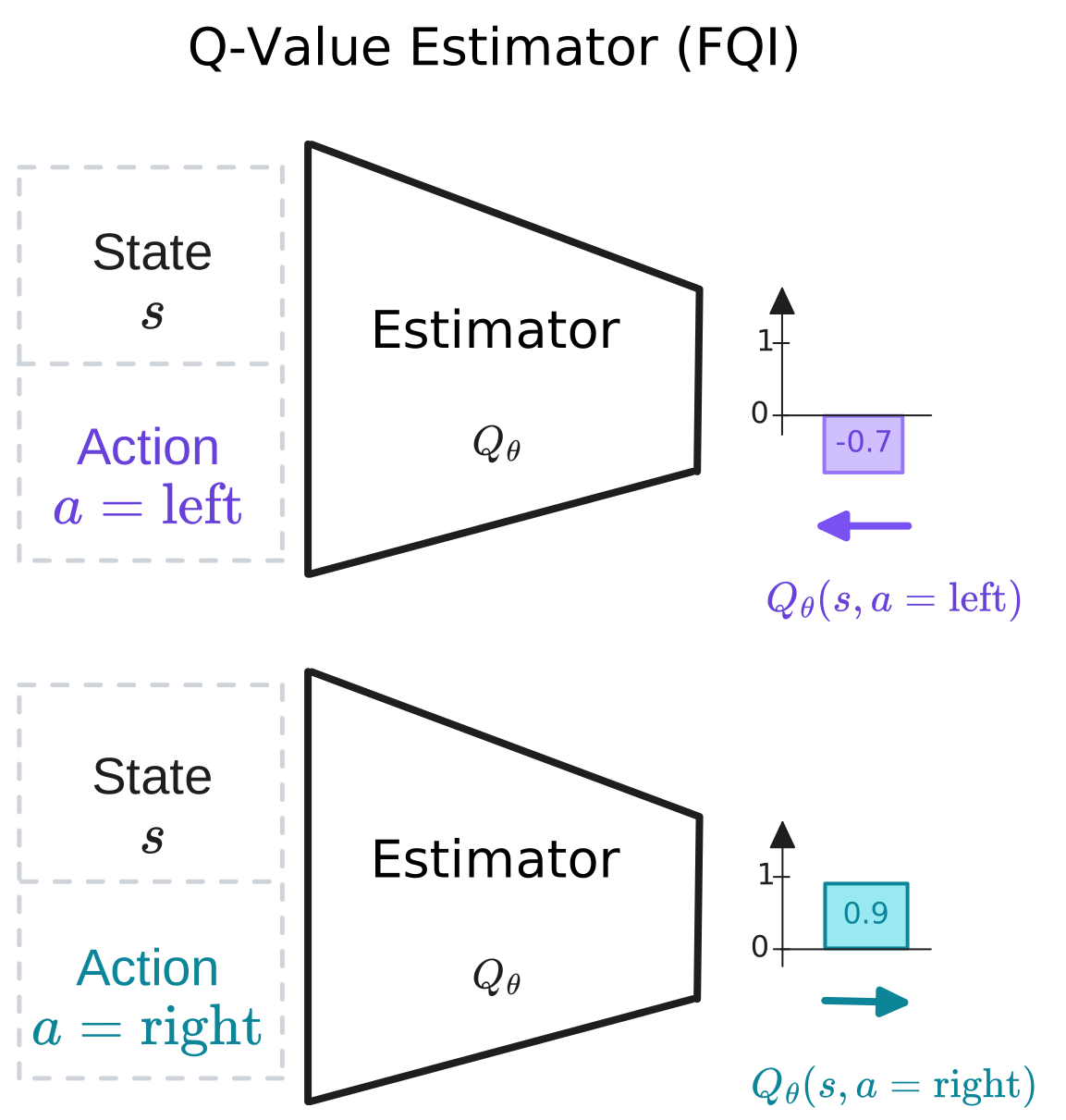
Q-Value Estimator (2)
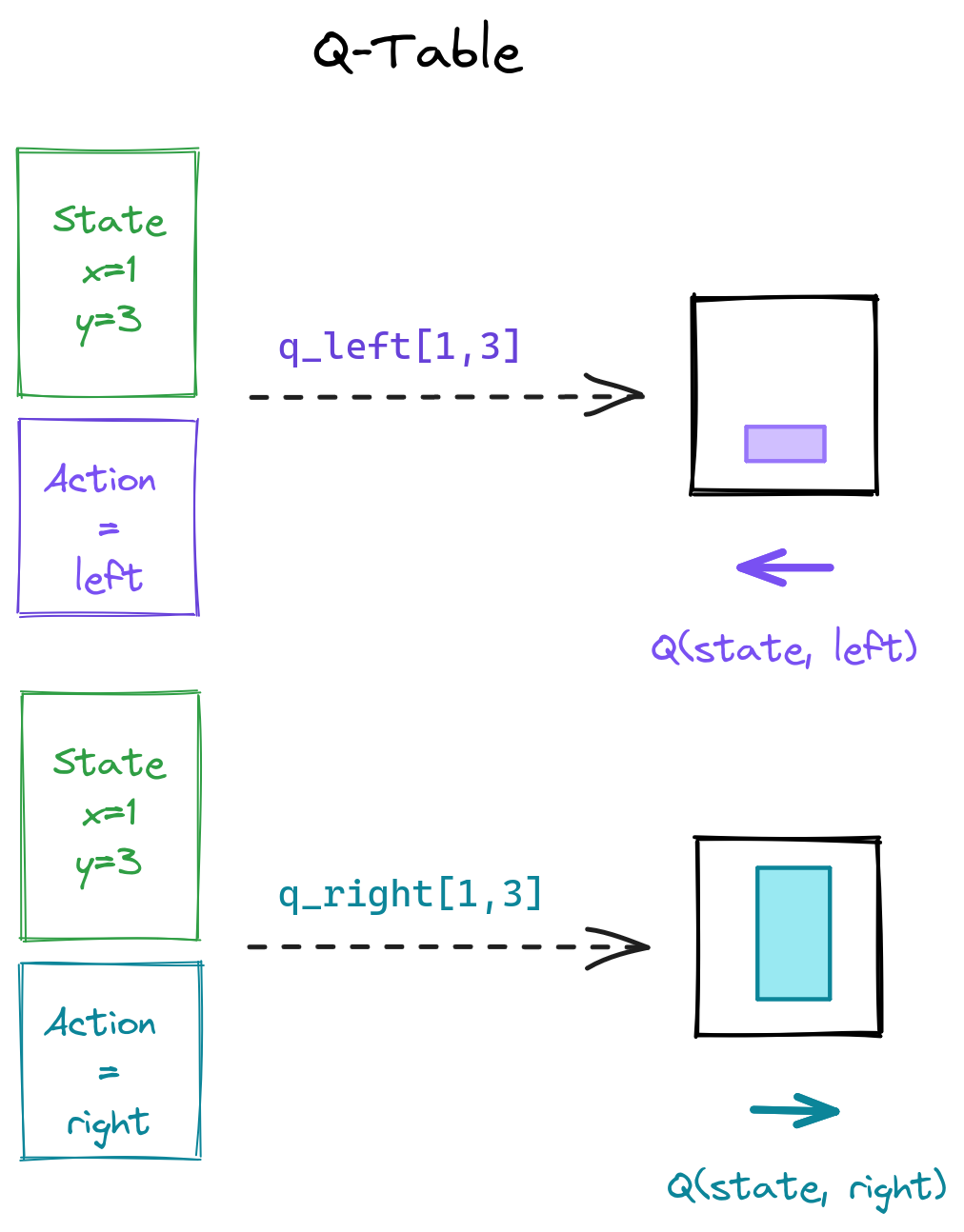
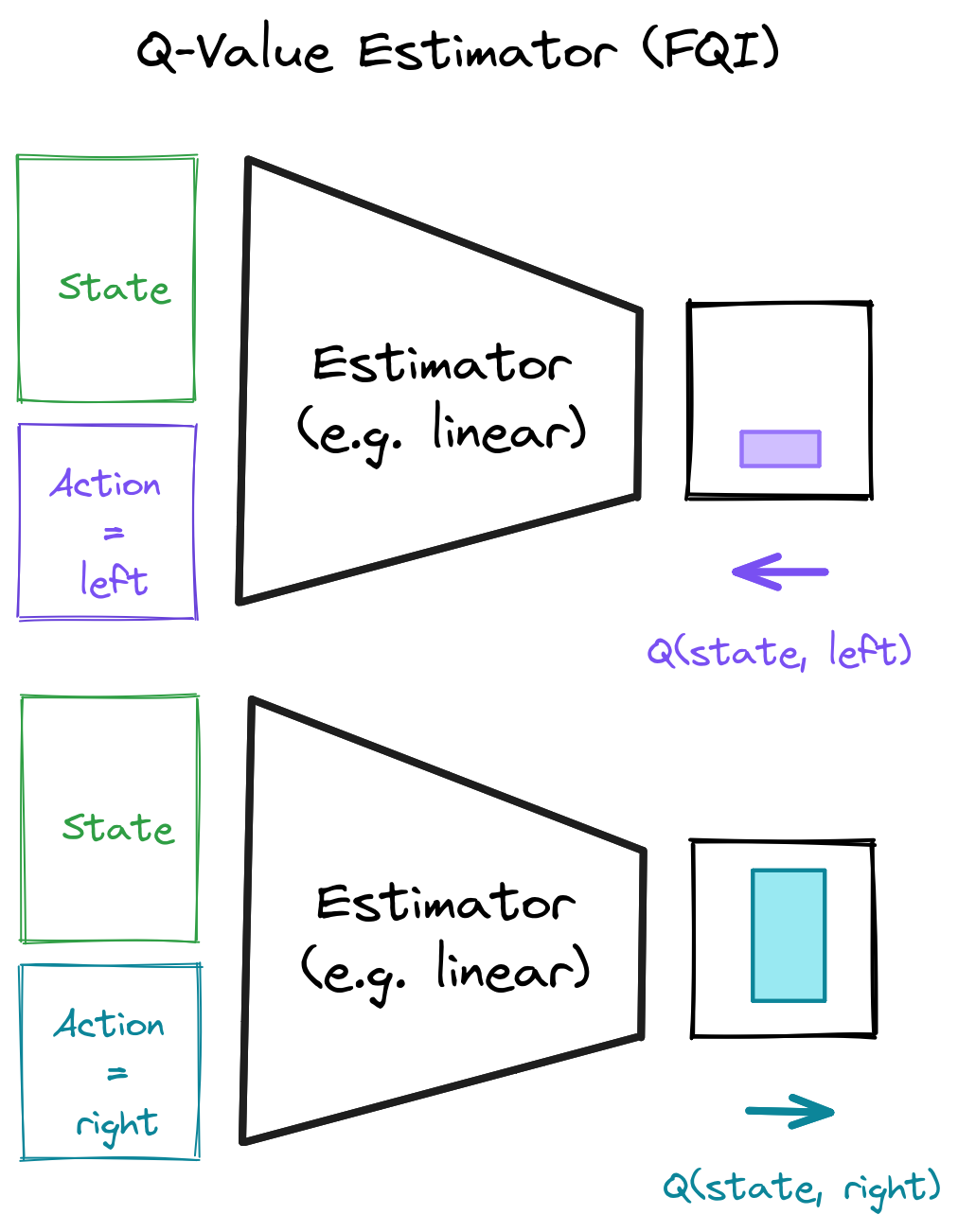
Q-Learning Regression
One small detail...
$\textcolor{#1864ab}{Q_\theta(s_t, a_t)}$ depends on $\textcolor{#a61e4d}{Q_\theta(s_{t+1}, a')}$...
What can we do about it?
Iterate! Use $Q^{\textcolor{green}{n}}_\theta(s_t, a_t)$
Fitted Q-Iteration (FQI) (1/2)
- Create the training set based on the previous iteration $ Q^{\textcolor{green}{n-1}}_\theta(s, a) $ and the transitions:
- input: $\textcolor{#1864ab}{x = (s_t, a_t)}$
- if $s_{t+1}$ is non terminal: $y = r_t + \gamma \cdot \max_{a' \in A}(Q^{n-1}_\theta(s_{t+1}, a'))$
- if $s_{t+1}$ is terminal: $\textcolor{a61e4d}{y = r_t}$
- Fit a model using a regression algorithm to obtain $ Q^{\textcolor{green}{n}}_\theta(s, a) $
\[\begin{aligned} \textcolor{#1864ab}{f_\theta(x)} = \textcolor{#a61e4d}{y} \end{aligned} \]
- Repeat, $\textcolor{green}{n = n + 1}$
Fitted Q-Iteration (2/2)
- $\textcolor{#1864ab}{x = (s_t, a_t)}$
- $\textcolor{#a61e4d}{y = r_t}$
Fitted Q-Iteration (code)
                                    initial_targets = rewards
                                    # Initial Q-value estimate
                                    qf_input = np.concatenate((states, actions))
                                    qf_model.fit(qf_input, initial_targets)

                                    for _ in range(N_ITERATIONS):
                                        # Re-use Q-value model from previous iteration
                                        # to create the next targets
                                        next_q_values = get_max_q_values(qf_model, next_states)
                                        # Non-terminal states target
                                        targets[non_terminal_states] = rewards + gamma * next_q_values
                                        # Special case for terminal states
                                        targets[terminal_states] = rewards
                                        # Update Q-value estimate
                                        qf_model.fit(qf_input, targets)
CartPole Env
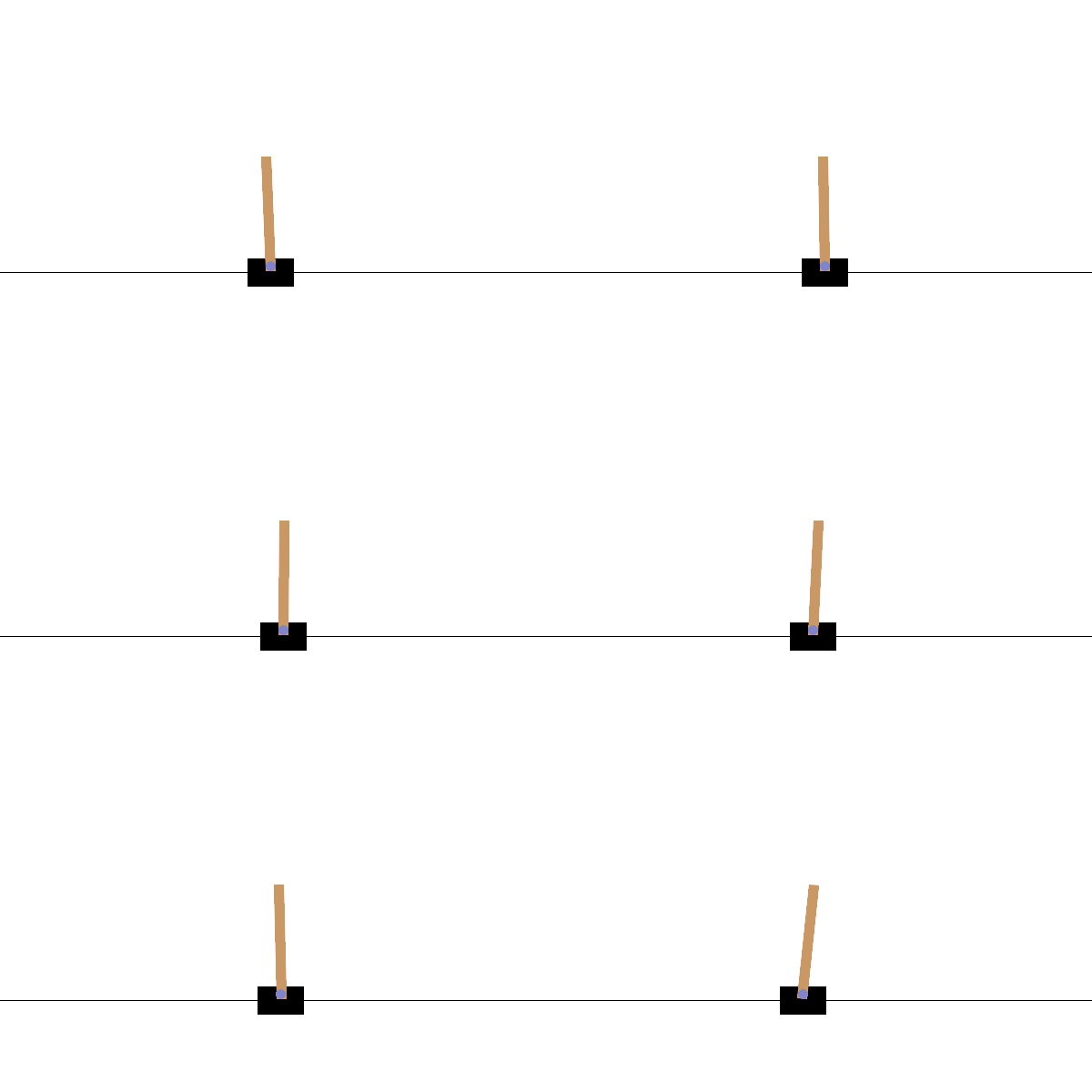
https://gymnasium.farama.org/environments/classic_control/cart_pole/
Gym/Gymnasium API
                             import gymnasium as gym

                             # Create the environment
                             env = gym.make("CartPole-v1", render_mode="human")
                             # Reset env and get first observation
                             obs, _ = env.reset()

                             # Step in the env with random actions and display the env
                             for _ in range(100):
                                 env.render() # Display the env

                                 action = env.action_space.sample()
                                 # Retrieve new observation, reward,
                                 # termination signal, truncation signal
                                 # and additional infos
                                 next_obs, reward, terminated, truncated, info = env.step(action)
                                 # Update current observation
                                 obs = next_obs
                                 # End of an episode
                                 if terminated or truncated:
                                     obs, _ = env.reset()
FQI in practice (1st notebook)
FQI Limitations
- Offline RL
- Loop over all possible actions $A$ to get next best action $\textcolor{#a61e4d}{a'}$: \[\begin{aligned} \max_{\textcolor{#a61e4d}{a' \in A}} Q_\theta(s_{t+1}, \textcolor{#a61e4d}{a'}) \end{aligned} \]
- Instability (target depends on $Q^{n-1}_\theta(s_{t+1}, a')$)
From FQI to DQN
- Offline RL → Online RL
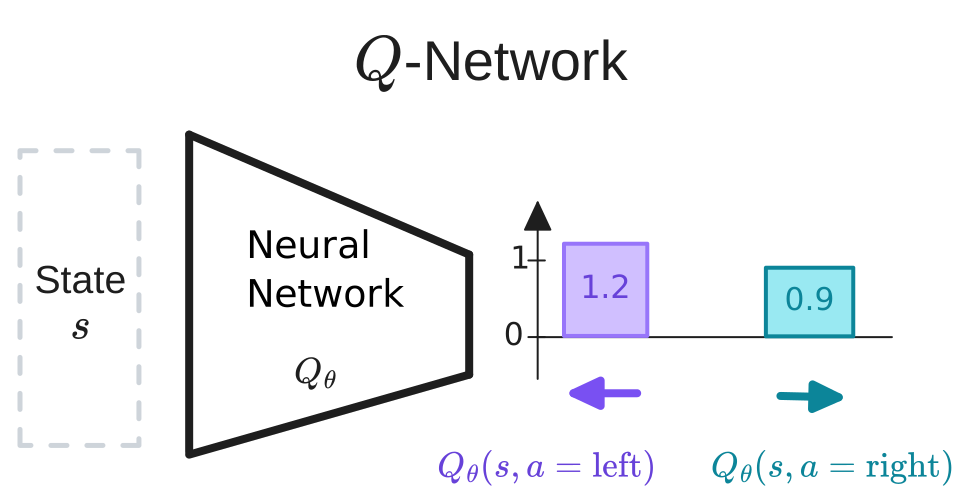
- Loop over actions → One forward pass to get all $Q_\theta(s, a)$
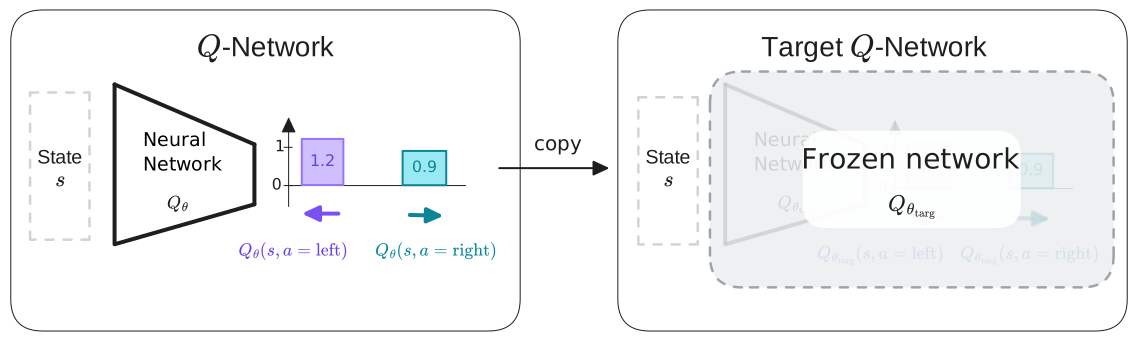
- Instability → Target Network $Q_{\textcolor{green}{\theta'}}(s, a)$
Questions?
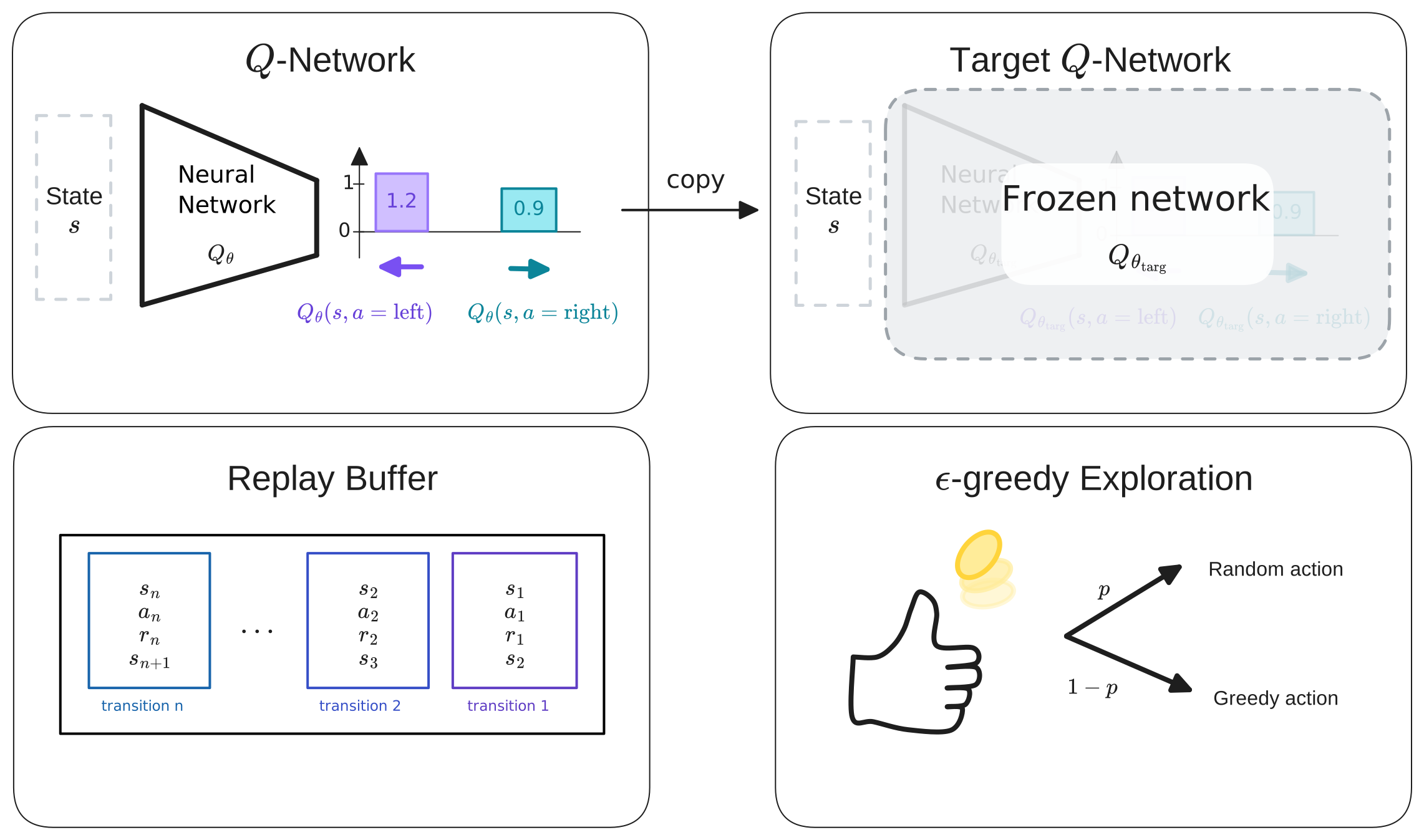
Deep Q-Network (DQN)
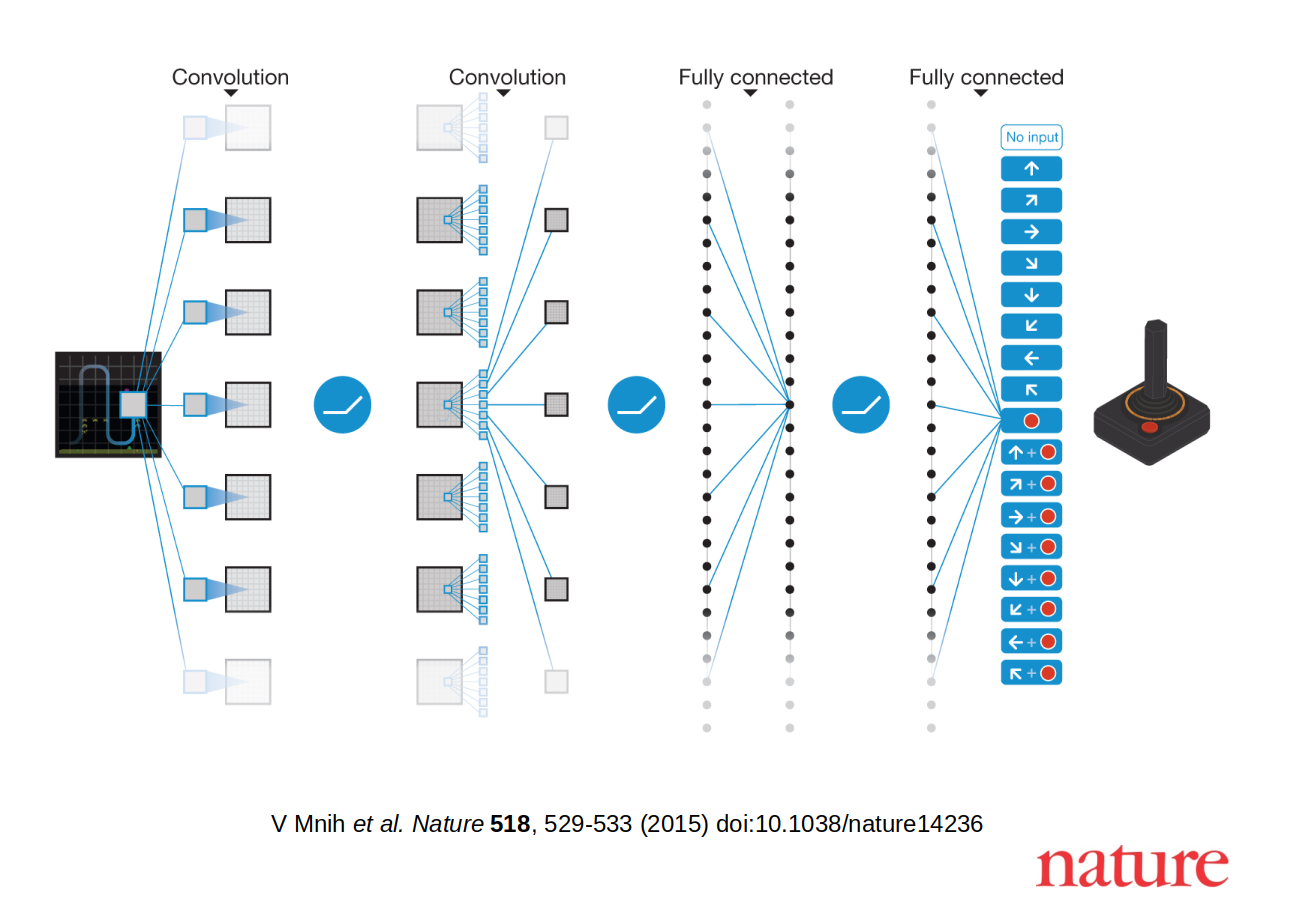
Mnih, Volodymyr, et al. "Playing atari with deep reinforcement learning." (2013).
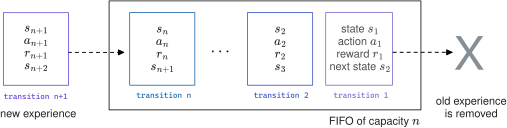
Replay Buffer
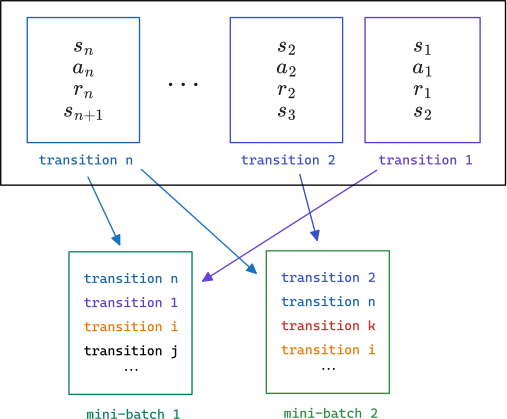
Replay Buffer Sampling
Q-network
The training loop
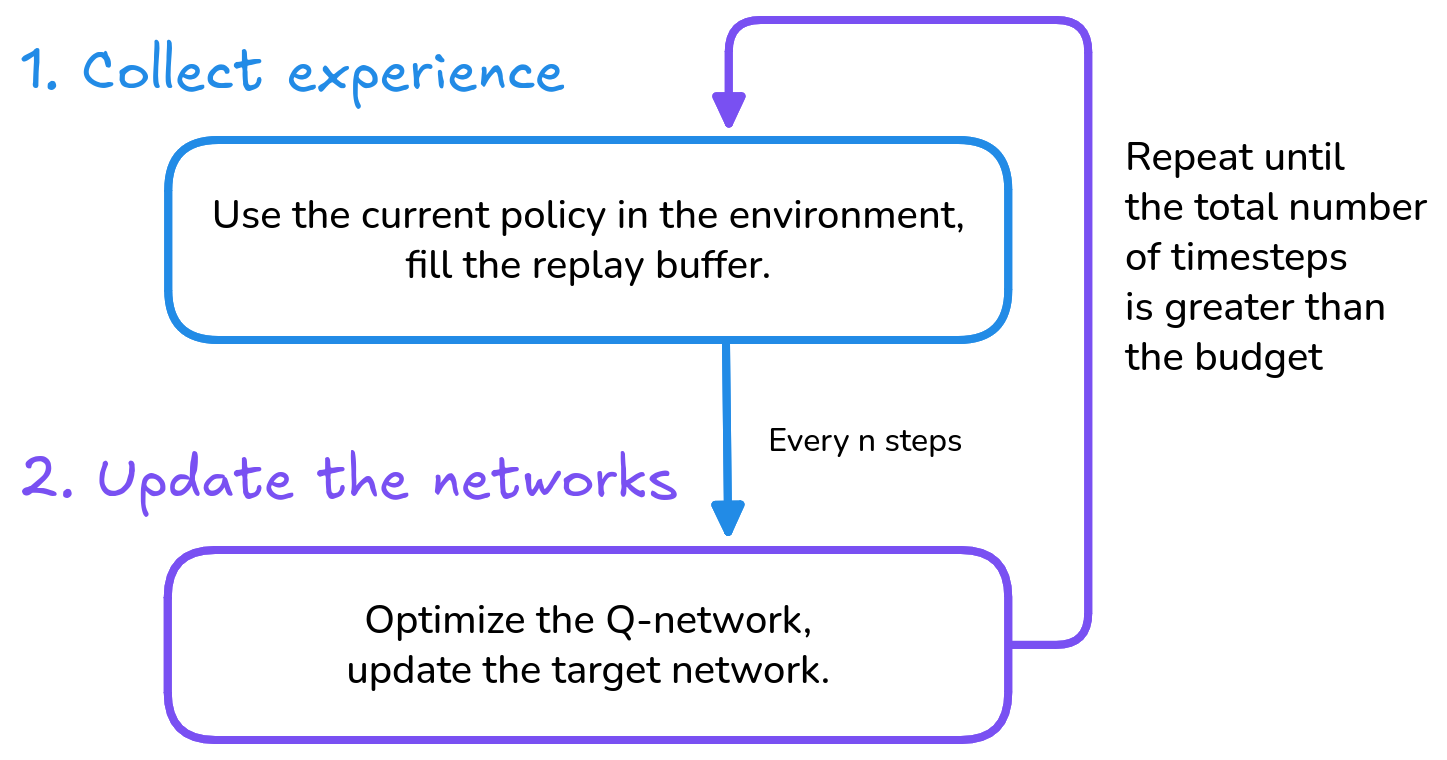
Collecting Experience
                                # Retrieve q values for the current observation
                                q_values = q_model(current_obs)

                                # Follow greedy-policy:
                                # take the action with the highest q_value
                                action = np.argmax(q_values)

                                # Do one step in the env
                                next_obs, reward, terminated, _, _ = env.step(action)

                                # Store transition in the replay buffer
                                replay_buffer.store(obs, action, reward, terminated, next_obs)
Exploration / Exploitation
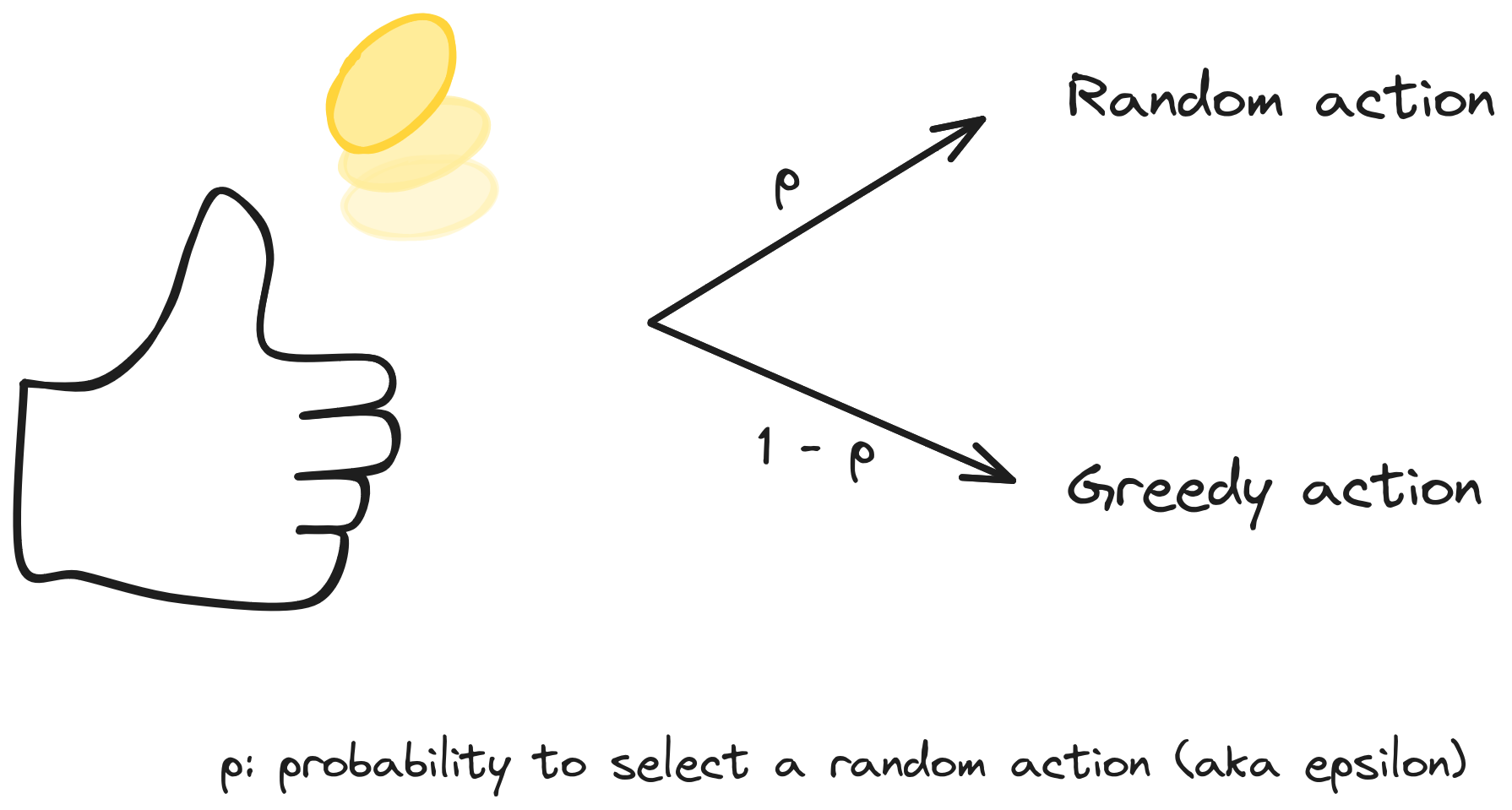
Epsilon-greedy Exploration
                             # Flip a biased coin
                             take_random_action = np.random.rand() < exploration_rate

                             if take_random_action:
                                 # Random action
                                 action = action_space.sample()
                             else:
                                 # Greedy action
                                 action = np.argmax(q_values)
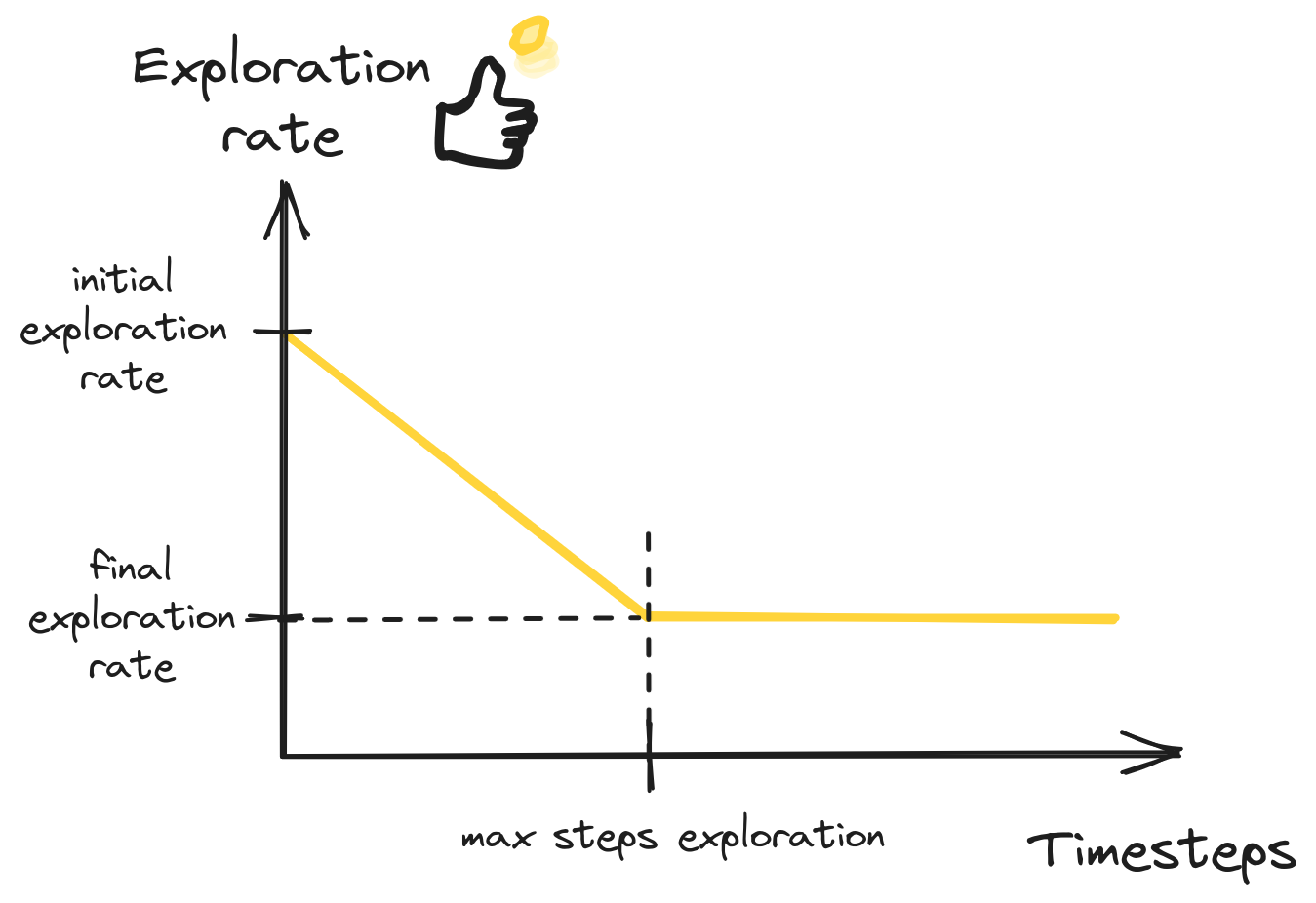
Exploration Schedule
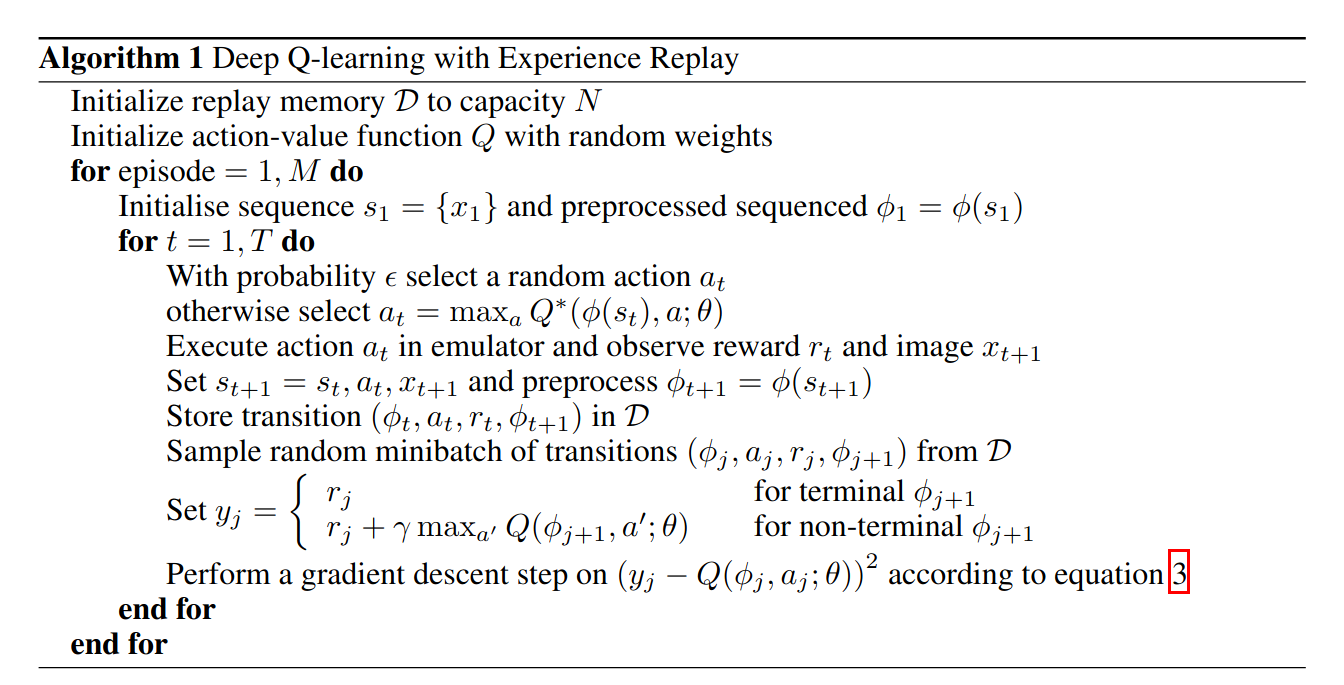
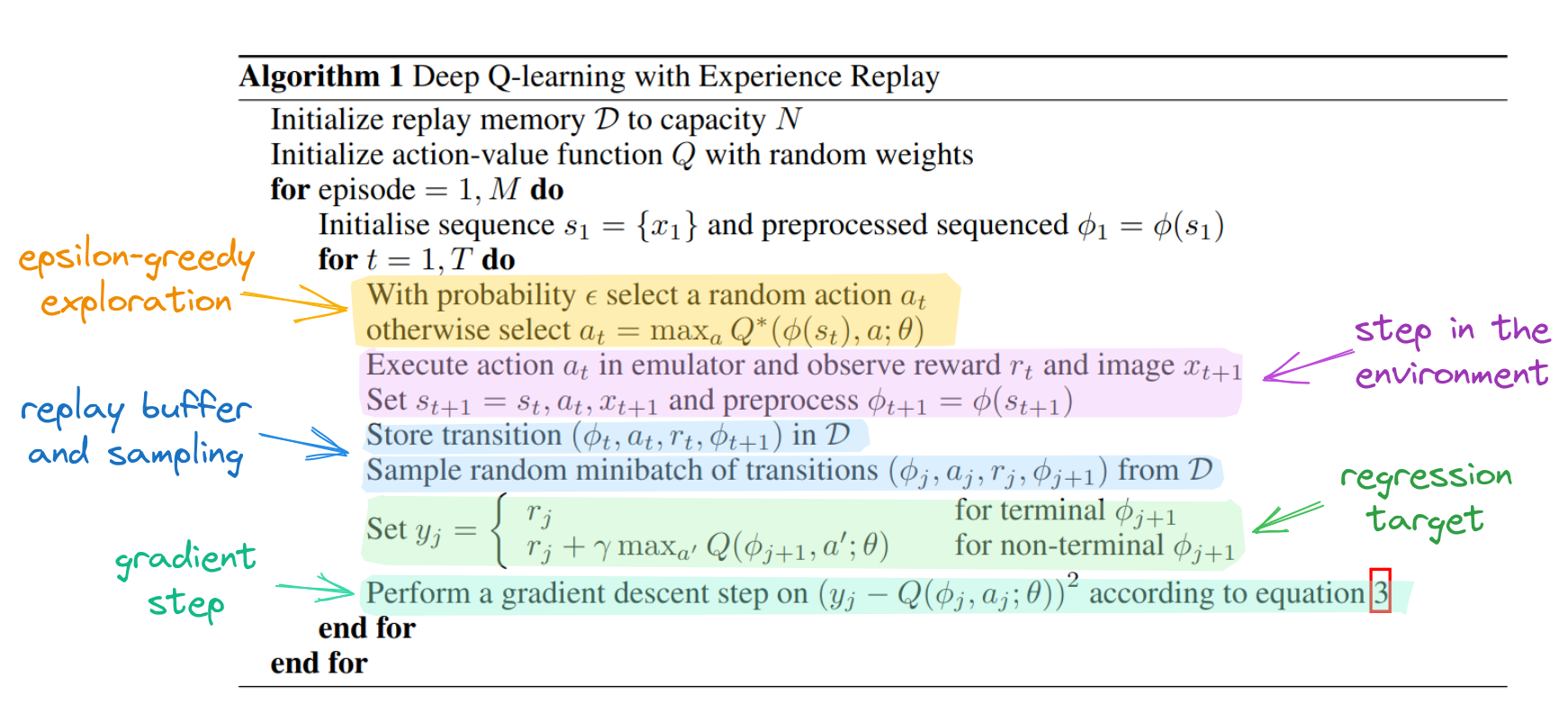
Annotated DQN Algorithm
Target Q-Network
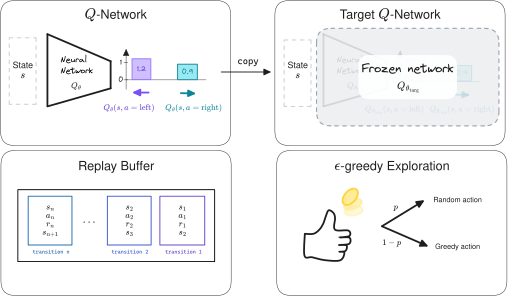
DQN Overview
Questions?
PyTorch API
| NumPy | PyTorch |
|---|---|
np.array([[1, 2], [3, 4]]) |
th.tensor([[1, 2], [3, 4]]) |
np.ones((2, 3)) |
th.ones(2, 3) |
np.concatenate |
th.cat |
x.shape |
x.shape |
x.argmax(axis=...) |
x.argmax(dim=...) |
x.item() |
x.item() |
| NumPy to PyTorch: | th.as_tensor |
Backup Slides
Regression 101
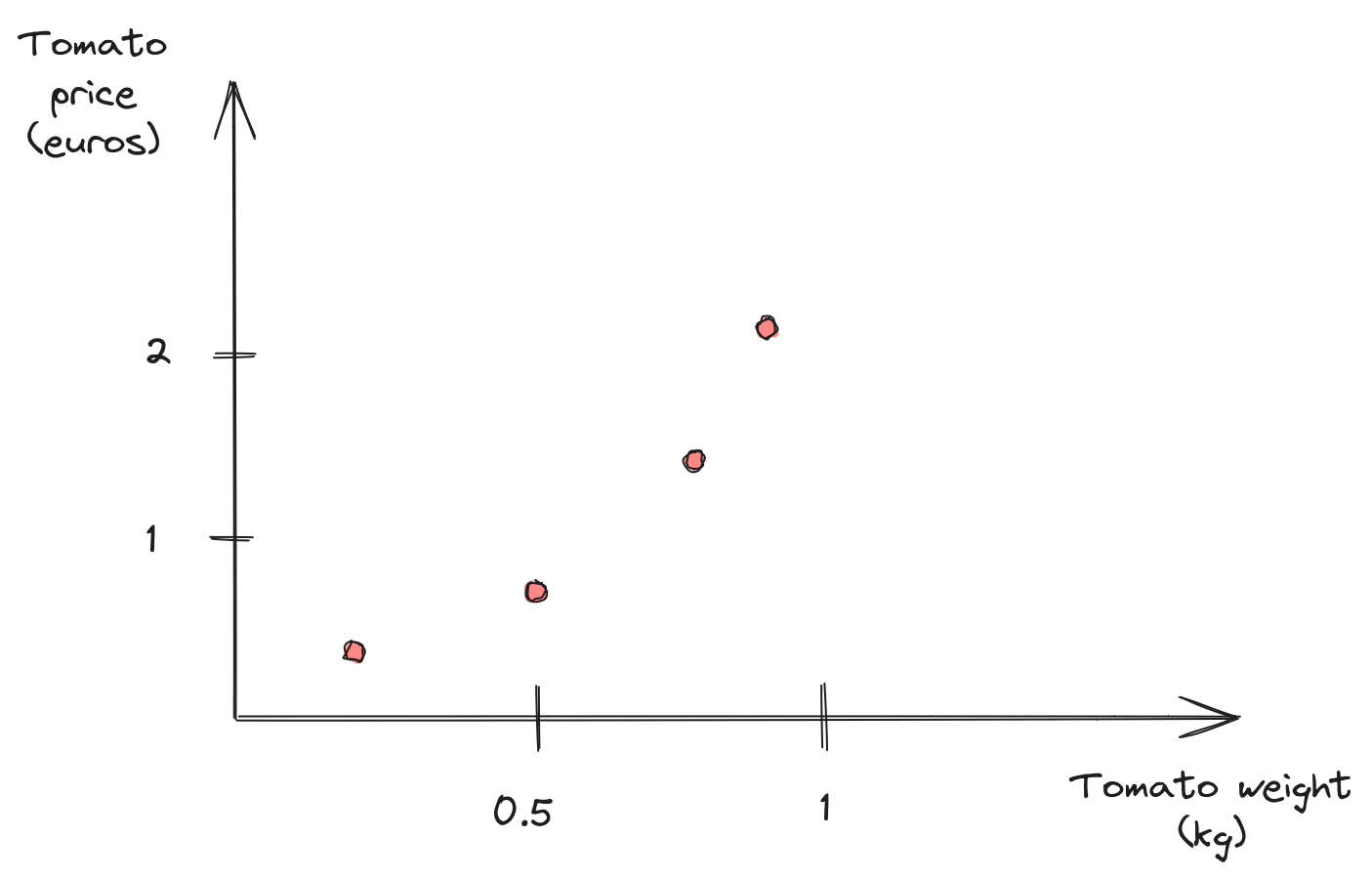
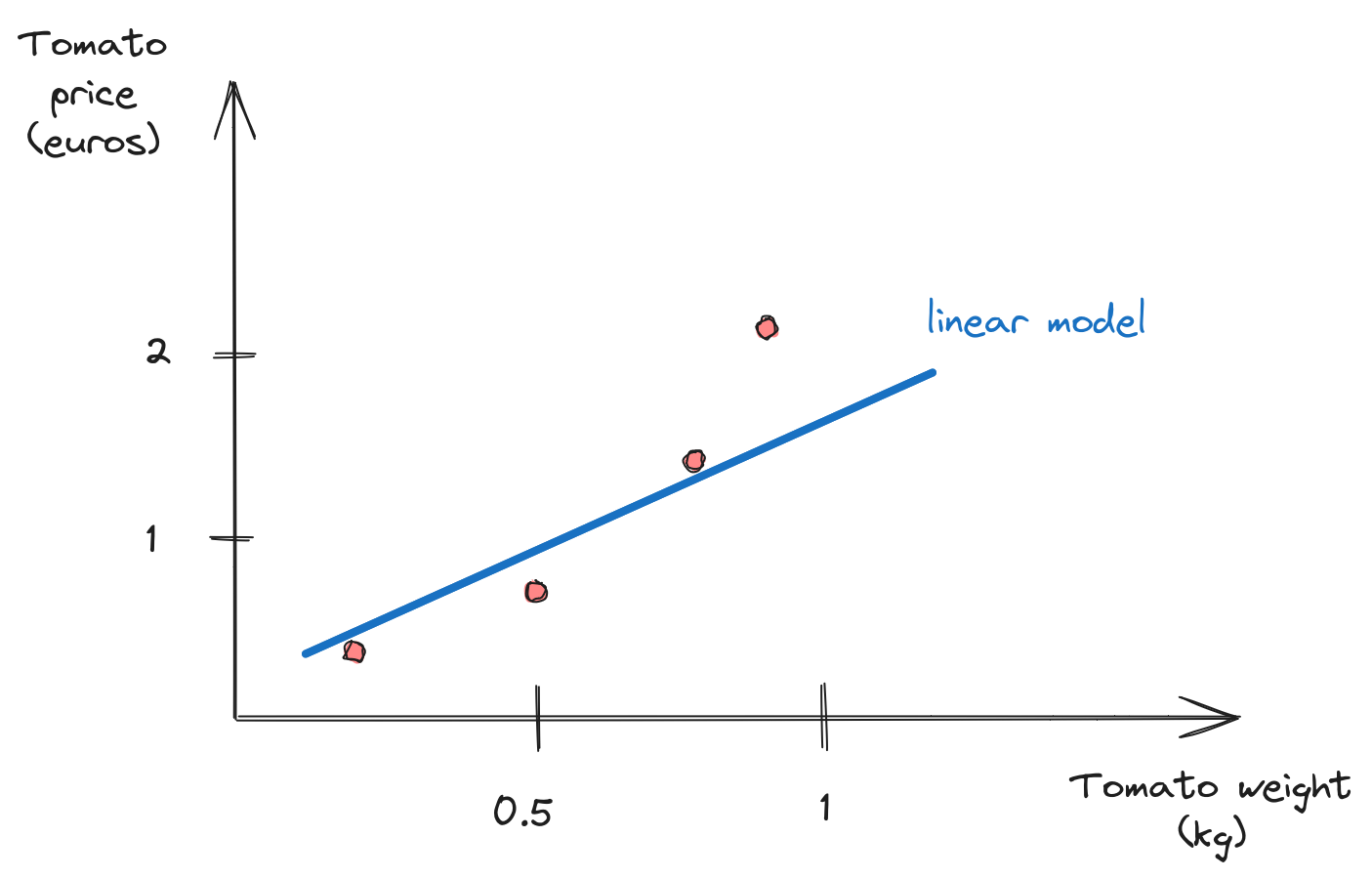
Linear model
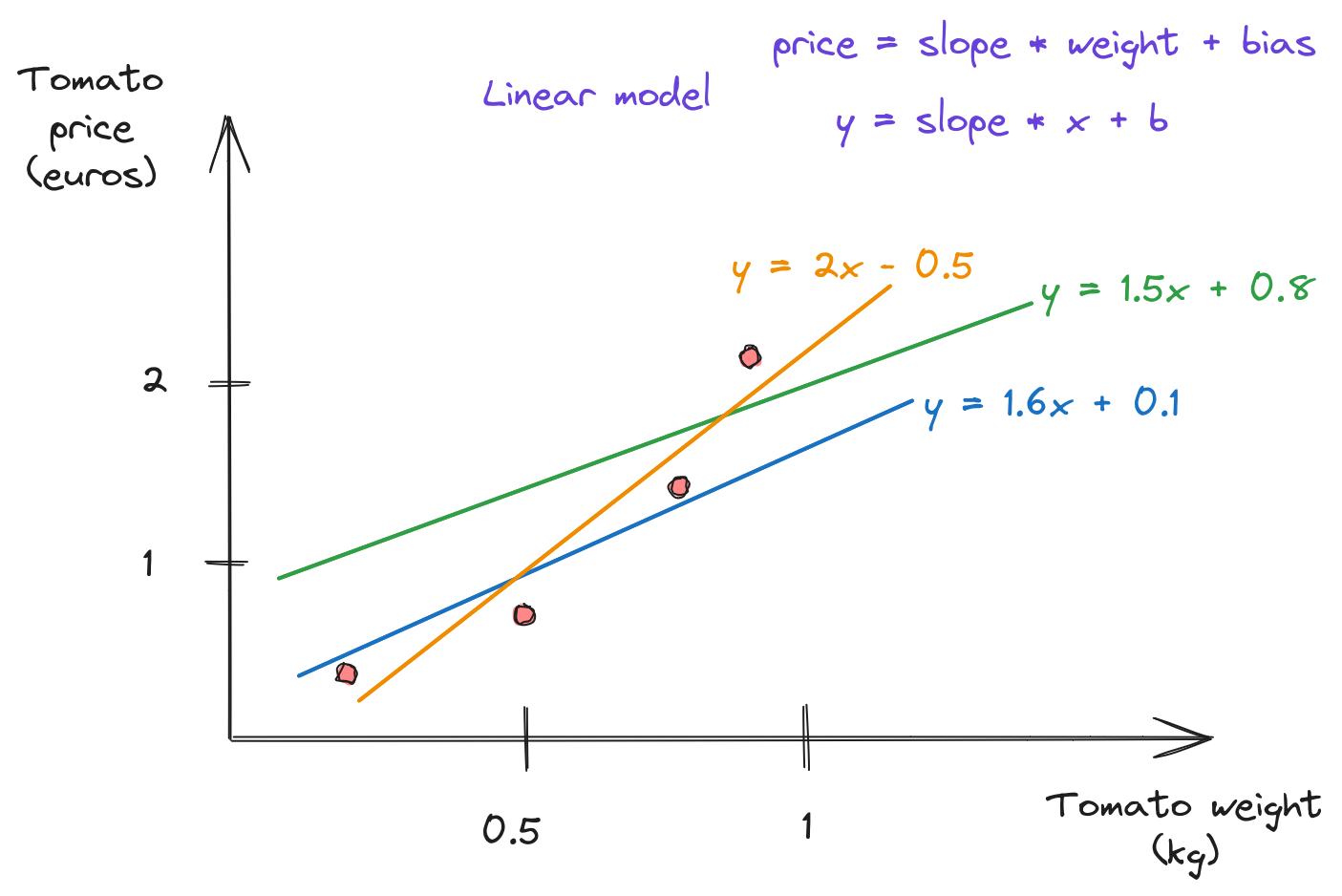
Linear model(s)?
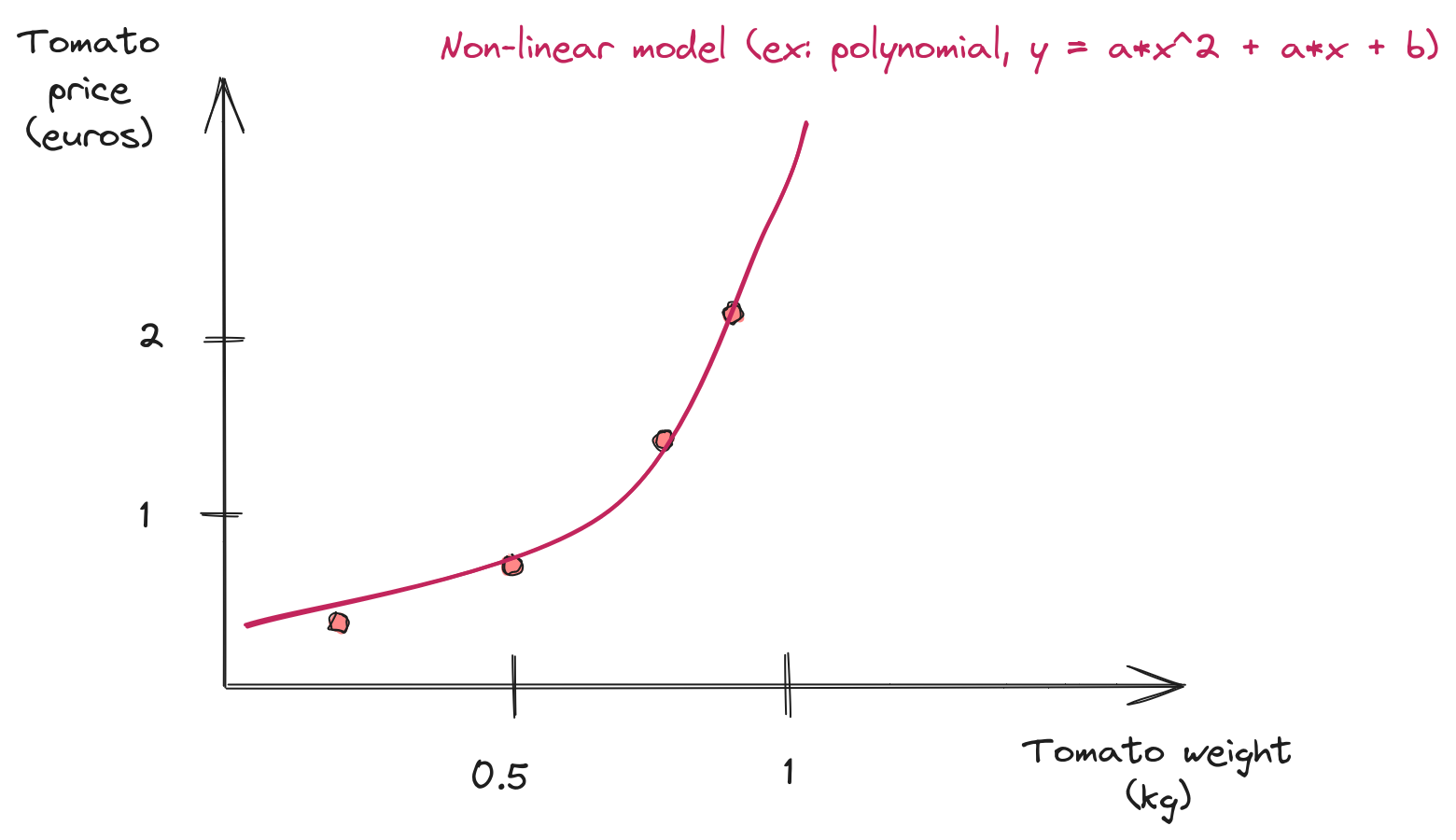
Non Linear Model
Scikit-Learn API
                                import numpy as np
                                from sklearn.linear_model import LinearRegression
                                # Generate some data (noisy linear function)
                                x = np.linspace(0, 5, num=50).reshape(50, 1)
                                y = 2 * x + 10 + 0.1 * np.random.rand()
                                # Fit a linear model using least squares
                                model = LinearRegression().fit(x, y)
                                y_predict = model.predict(x)
                                # Retrieve the optimized parameters
                                slope, bias = model.coef_, model.intercept_